What a change order is
A change order is a written change to the job after the contract is signed: something added, removed or done differently, with its price and any effect on the schedule.
General information, not legal, financial or construction advice. Check your contract and local rules with qualified professionals.
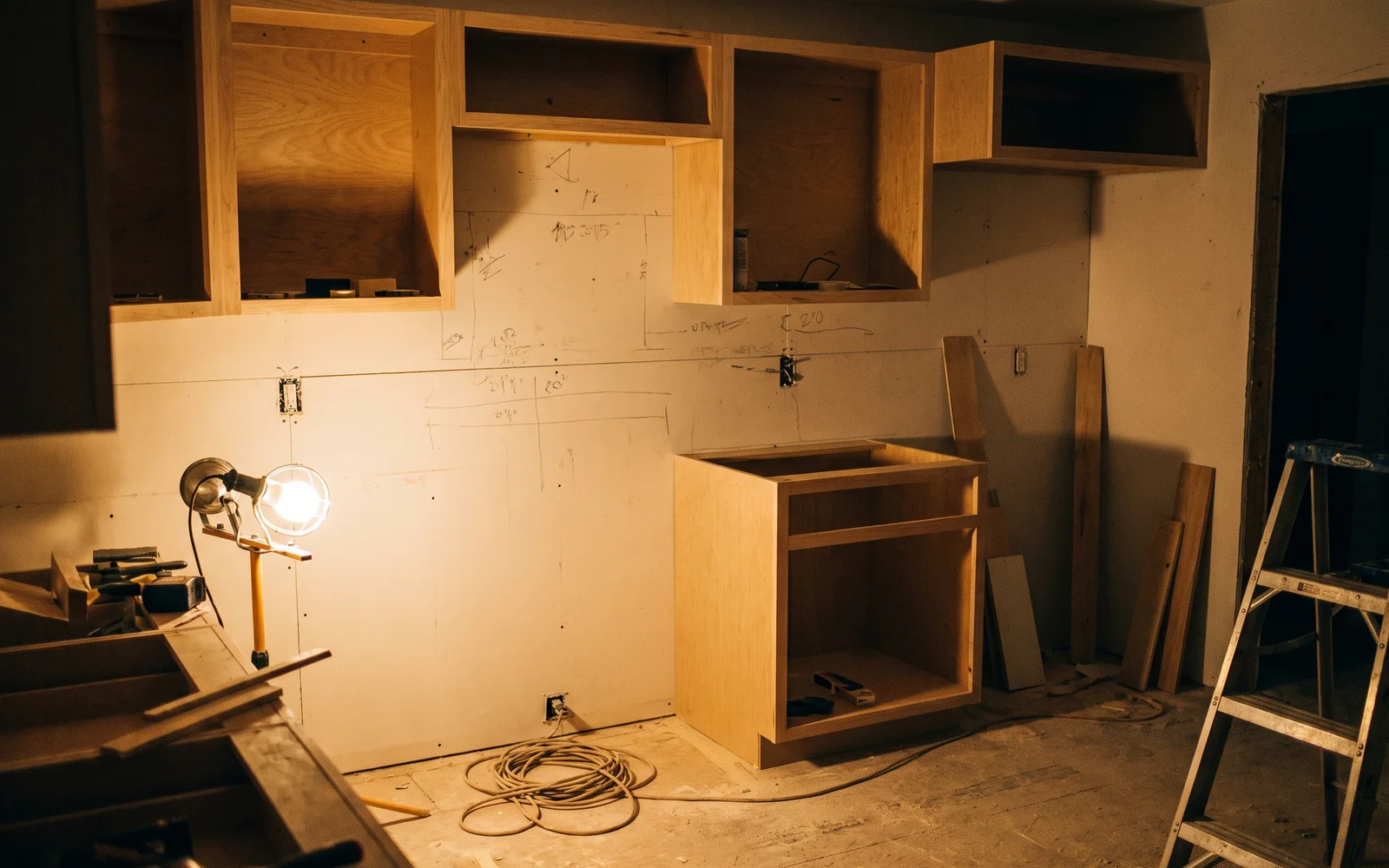
Where change orders come from
Changes come from two directions. Some are yours: you pick a different finish, add an outlet, decide the pantry should run to the ceiling. Some come from the house: the wall hides a pipe that has to move, or an inspection calls for something the plan did not show.
Either way, the work is now different from the work that was priced, so the price needs to change too. The change order is how a conversation on site becomes part of the agreement.
Changes are normal on a renovation. A change order is not a sign that something went wrong between you and whoever is doing the work. It is the tool that keeps the agreement accurate as the job moves.
What a clear one says
A change order should be clear enough that someone reading it a year later knows exactly what happened. Look for:
- What is changing, in plain words, and where.
- The price of the change, split into material and labor where that makes sense.
- Any credit for work that is no longer needed.
- The effect on the schedule, even if the effect is none.
- Written approval from both sides, with the date.
Example Partway through the kitchen, the homeowner asks for a thicker countertop edge and an extra cutout for a prep sink. The change order describes the work, prices it at $1,400 ($900 material, $500 fabrication), moves the countertop install two days later, and is signed on May 12. The countertops line, with a $4,800 allowance, now comes to $6,200.
Change orderExample
- Change
- Thicker countertop edge, extra cutout for a prep sink
- Material
- $900
- Fabrication
- $500
- Price of the change
- $1,400
- Schedule
- Countertop install two days later
- Approved
- Both sides, May 12
- Countertops line
- $6,200 against a $4,800 allowance
- Contingency left
- $2,100 of $3,500
Asked. Partway through the job, the homeowner asks for a thicker countertop edge and an extra cutout for a prep sink.
Priced. Before any work, the change is written up with its price and what it does to the schedule.
Signed. Both sides approve it in writing on May 12, before the slab is cut.
Logged. The change order goes on the Countertops line. The line passes its allowance, and the contingency covers the difference.
Your numbers, written down. Not an estimate.
Agree the price before the work
The most useful habit is settling the price before the work is done. A change made on a handshake and priced afterwards is where disagreements start: one side remembers one number, the other remembers another, and nobody wrote either down.
It can feel awkward to stop and ask for a written price for a small change. Ask anyway. Small changes add up, and a clear record protects both sides. Many contracts set out how changes are requested, priced and approved; read that part before work starts so you know the steps.
Keep a running log
Each change order changes what the job costs. Keep them in one place, in order, with their amounts, and add each one to the line it belongs to. Then the budget always matches the job you are actually building, not the one in the original contract.
When the final bill arrives, you can check it against the contract plus the change orders, line by line, and see exactly where every difference came from.
Keep the signed copies too, not only the amounts. A photo of each signed change order, filed with the date, settles most questions faster than anyone's memory of what was agreed on a busy afternoon.
Credits, removals and small changes
Not every change order adds money. If you decide to keep the old flooring in the pantry, or to buy the light fixtures yourself, the change order should show a credit for the work or material that is no longer part of the job. Check that credits appear as clearly as additions do.
Small changes deserve paperwork too. An extra outlet or a moved switch may seem too minor to write up, but five of them together are a real line on the final bill. A short written note with a price and both approvals is enough. What matters is that it is written before the work, not reconstructed afterwards.
When changes start to add up
If change orders begin eating into the contingency, pause and look at the whole budget. A change that seemed small on its own may be the one that decides whether the reserve still covers what the house has yet to reveal. Better to make that call with the numbers in front of you than to find it on the last invoice.
How Cobblewood logs a change order
With Cobblewood Plus, each change order goes into a change-order log against the line it changes, with its date and amount. The line total updates, the contingency updates, and if the line runs over, Cobblewood flags it. You enter change orders yourself from the signed paperwork; Cobblewood keeps the arithmetic and the record.
Plus costs $7 a month or $60 a year. Free covers one active project with its budget, contingency, line items, and payment and receipt log.