What a renovation contingency is for
A contingency is money you set aside inside the budget for work nobody can price yet. It is there because a house only shows what is behind its walls once the walls are open.
General information, not legal, financial or construction advice. Check your contract and local rules with qualified professionals.
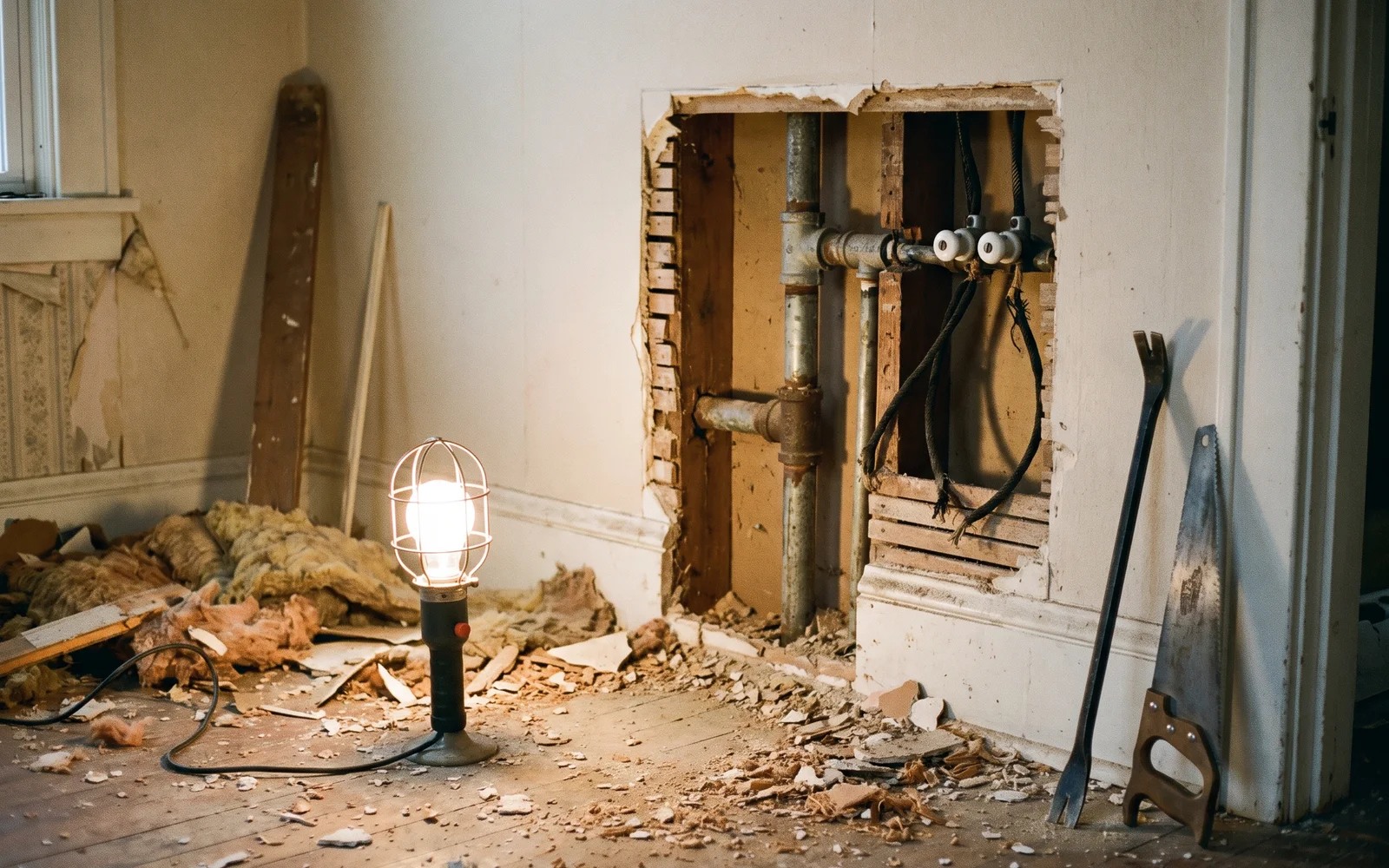
What the reserve covers, and what it does not
The contingency is part of the budget, not extra on top of it. It is not a cushion for upgrades, and setting one aside does not mean you expect the job to go wrong. It means you know a renovation opens up parts of a house nobody has seen in years.
Think of it as paying for two kinds of surprise: what the existing house hides, and honest gaps in the plan. Wiring that has to be brought up to current rules once it is exposed. A soft subfloor under the old sink. A pipe in the wall where the new window was meant to go. A line item that comes in above what you set for it.
What it should not pay for is new wants. Deciding halfway through that you would like a bigger island is a change to the job. It deserves its own decision and its own price, not a quiet withdrawal from the reserve.
Choosing a figure for your house
No single number fits every house, so rather than borrow someone else's, build yours from what you know. Two things count above the rest.
The age of the house. An older house has had more years of repairs, more owners, and more work done to rules that have since changed. The older it is, the more you should expect to find when you open it up.
The unknowns in the scope. Go through the plan and mark every place where the work goes somewhere nobody has looked: opening a wall, moving plumbing to a new spot, taking up old flooring, changing the layout. Each one is a place where the price can change once work starts. Replacing cabinets where they stand has few of these. Moving the sink across the room has several.
Start from a base that reflects the age of the house, add something for each unknown, and write down why. Then check the total against the budget. If the reserve you arrive at does not fit, that is worth knowing before the first deposit, while the scope can still be trimmed.
Example A kitchen with $38,500 of line items in a house between twenty and fifty years old, with one wall being opened. The contingency is set at $3,500, so the total budget is $42,000. When the countertops come in $1,400 over their allowance, the contingency covers it with $2,100 left.
Age of the house
Unknowns in the scope
What turned up once work started
Covered by the contingency, with $2,100 left.
Example amounts for one kitchen, to show the reasoning. Not a figure for your house.
Your numbers, written down. Not an estimate.
Keep it on its own line
A contingency only works if you can see it. Mixed into the line items, it gets spent a little at a time without anyone deciding to spend it. Keep it as its own line, and each time you draw on it, write down what for and how much.
Then at any point in the job you can say exactly how much reserve is left and what used the rest. That one figure answers most of the worrying questions a renovation raises.
When it starts to run low
If the reserve is getting thin with a lot of the job still ahead, that is the moment to look at the remaining lines, not the end of the job. Are there finishes not yet ordered where a different choice would free up room? Is there a piece of the scope that could wait for another year?
Deciding early keeps the choices yours. Deciding late usually means paying for whatever is already on order.
It also helps to check the reserve at fixed points rather than only when something goes wrong: after demolition, once the walls are closed, and before the finishes are ordered. Each of those is a moment when the biggest unknowns have just been answered.
What happens to what is left
If the job finishes with money still in the contingency, it was not wasted. It did its work by being there, and it let you make calm decisions when something did turn up. What you do with what is left is your call. The point is that you know the figure to the dollar.
How Cobblewood keeps the contingency
In Cobblewood the contingency is its own line, marked in chalk blue and kept apart from the line items. When a line runs over, Cobblewood shows the overrun on its line and what the contingency still covers, in the app and by email, so you watch the reserve go down as it happens instead of finding out at the end.
The figures are the ones you enter. Cobblewood does not estimate what your contingency should be.